Why Is It Hard to Read Text on Colored Background With Cataracts
Visual Disabilities
Depression Vision
Types of Depression Vision
"Low vision" is a wide label for a range of conditions that interfere with daily living and cannot be fully corrected by spectacles. Although more than common amid the elderly, it can occur at any age because of conditions such as macular degeneration, glaucoma, diabetic retinopathy, or cataracts. Each of these conditions affects a person'due south vision in different means. Content that is small-scale, does not enlarge well, or has low contrast may exist difficult to perceive.
Macular degeneration
The macula is about the center of the retina, which is the area in the back of the heart. "Dry" macular degeneration occurs as the tissues of the macula thin out over time, creating a gradual loss of vision. "Wet" macular degeneration, which is less common, occurs when blood vessels at the dorsum of the eye begin to leak fluid or blood which blurs central vision and often creates rapid loss of vision. In either case, the person's fundamental area of sight is affected the most. The images below help illustrate the effect of macular degeneration.
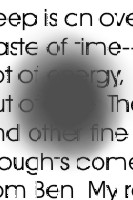
People who are sighted can simulate the impacts of macular degeneration by property up their paw about 12 inches (xxx cm) from their optics, then that they can't encounter straight in front end of them, but can see around the edge of their hand—and then trying to read something in their peripheral vision while remaining focused on their hand.
Glaucoma
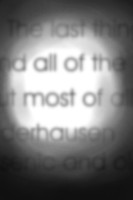
Glaucoma is caused by increased pressure inside the eye that damages the optic nerve. The result is often the inverse of the effect of macular degeneration: loss of peripheral vision and blurry vision in the center. Text will exist difficult to read. Some people accept compared glaucoma to looking at everything through a harbinger.

Diabetic retinopathy
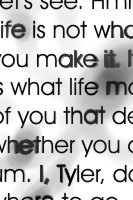
One potential upshot of long-term diabetes is leaking retinal blood vessels, which tin can crusade night patches in the field of vision where the leaks occur, making information technology difficult to read text.

Cataracts
Individuals with cataracts take areas of opacity in the lens of their optics, which creates a blurred or hazy effect, especially in vivid calorie-free. Text may be difficult to distinguish from the background. High contrast is especially important for people with advanced cataracts.

Screen Magnifiers and Zoom
Screen magnification and zoom are the most mutual technologies that people with significant low vision use. Software or operating system settings can exist used to magnify the entire screen or portions of the screen, allowing people with low vision to see it more than clearly. Users can also conform their browsers to zoom a web page or to increase their default text size.
Some kinds of content do not well support beingness enlarged or zoomed. For example, low quality graphics that contain text may get blocky and pixilated when enlarged, making the text difficult to read. Consider the ii images below. The one on the left is a screenshot of text that has been enlarged. The image on the right is a screenshot of text inside a graphic that has been enlarged.


Of import
To make text more legible when enlarged, utilize true text as much as possible, rather than rasterized or graphical text.
Web pages should exist designed so that there is no loss of content or functionality when they are enlarged/zoomed or when the text size is increased. With few exceptions, horizontal scrolling should be avoided—it is especially difficult to read folio content when the user must scroll or pan to read lines of text that extend off the screen. Implementing responsive/adaptive design to support small screen and mobile devices will also ameliorate ensure that content adapts to a screen when it is zoomed or enlarged.
High Dissimilarity and Customized Colors
Web content with low contrast, meaning the brightness divergence betwixt text or a graphic and its background, can exist difficult to read, especially for people with low vision. Some color combinations are not easy on the eyes for anyone, particularly for people with low vision. Color contrast tin be checked using WebAIM's Contrast Checker to ensure information technology meets the WCAG 2 guidelines.
While authors should ensure their content has sufficient contrast, some users with low vision may need even more dissimilarity. Some may benefit from specific color combinations, such equally blueish text on a yellowish background. Users with depression vision may enable high contrast modes or may override default colors via settings in their operating arrangement or web browsers. When these are enabled, users may not come across the author-defined spider web page colors.
Important
Pure black-on-white content can sometimes feel too contrasty and may be difficult to read. Designers should try to create a visual presentation that is both pleasant and conformant. Ensure that color is not used as the only means of indicating or differentiating meaning or content.
Final updated:
Source: https://webaim.org/articles/visual/lowvision#:~:text=to%20read%20text.-,Cataracts,for%20people%20with%20advanced%20cataracts.
0 Response to "Why Is It Hard to Read Text on Colored Background With Cataracts"
Post a Comment